My comments regarding Neil Patel’s post Harsh Realities of Starting a Business:

Neil Patel suggests these top 7 harsh realities in starting a business. I agree with some, but there are more important harsh realities that, although small, can eat you up inside and make you fear that the there is no light at the end of the tunnel.
His ‘Harsh Realities’:
1. Starting a business is like a roller coaster. He says there isn’t a ton of glamour in creating a company; instead it’s like a roller coaster. You’d have to be a complete moron to think that starting out on your own is ‘glamorous’. This is a HUGE harsh reality, and fact. There is no guaranteed level of comfort in the 1st year of business. Instead there is hope, but not too far from that there also lies failure.
2. Owning a business isn’t easier than working at a 9 to 5 job. He says that this is what most entrepreneurs believe, but it is very inaccurate. He explains that instead of having one boss you have many and that when you work at a 9 to 5 job all you have to do is work from 9 to 5. Hmm, well I know many entrepreneurs that choose their own clients, hence don’t have ‘bosses’ because they work with/for people they WANT to work with, and also hold regular work hours.
3. Consumers have to believe you are solving a problem. He says it doesn’t matter if you think you are solving a problem, all that matters is that your target customer thinks you are solving a problem. Is this not lying then if you really aren’t solving a problem? Not only do you have to make life easier for your customers (hence the solving a problem) you actually HAVE TO SOLVE their problem(s). If your marketing cries out a solution, then you must follow through with it. Or else it will come back to bite you in the a**!
4. You have to make money. OK, ummm ….duh! Unless of course starting a ‘business’ to you means donating your time/money/resources, then making money isn’t important.
5. You have to give a lot to get a little. He says in today’s world you have to give a lot. Whether it is free information or samples of your product, you have to do something to build trust from your customers. If they don’t trust you, they won’t spend money with you. I agree with this, but at the same time, this is not new (I.e. …in today’s world). Building trust and creating long lasting relationships is inevitable in business. Your most loyal customers are the ones that trust you the most. David Maister speaks wonders on the issue of trustworthiness.
6. Coolness is inversely correlated to success. Here he compares Exxon Mobil to Facebook and Twitter in terms of coolness. These are two completely different industries. You don’t have to be ‘cool’ to supply one of the most important resources, oil. All you have to do is extract it and sell it. When you are talking online terms, coolness IS important. Answer me this; which brands are considered ‘cool’: Amazon, Twitter, Facebook Zappos, Piperlime? Answer: all of them. Now, answer me this, which brands are considered necessary: Exxon Mobil, Toronto Hydro, Twitter. The 1st two. Twitter we can live without, but it is still cool.
7. Time is worth more than money. He says if you take your time and release your company when you think it’s perfect, you’ll be in for a big surprise. You will never be able to please everyone and you will always run into things that you never thought about. I can go on and on here, but really this all depends on your industry. Whether or not you’re selling a product or service, you MUST test it, research it, and understand it, before you make the launch. You don’t want to bring a dysfunctional product to the mass market. It will instantly tarnish your brand. Find a happy/safe medium between public launch, beta testing, and behind-closed-door testing.
My biggest and most obvious conclusion is that, yes entrepreneurship can be difficult, and it is not glamorous, but more specifically if you are going into business for yourself doing something you love to do, then it is NOT WORK. It is your passion. David Foster said to the Editor of Success magazine, “If you aren’t working on Saturday or Sunday, then you don’t like what you do”. In David Foster’s eyes, Neil Patel doesn’t like his job.
Twitter lists
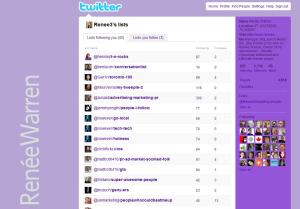
Still trying to wrap my head around the possibilities of using Twitter lists, but it seems to be good for business. I find personal enjoyment in finding my names on lists like people-who-can-beat-me-up and eatmorecake. Unrelated, but none the less hilarious. For business sake Twitter lists allow you to group together, follow, and find Twitter users. It`s that simple. If there are very specific people you want to follow, create a list and follow them, or invite others to follow them with you. Here are some ideas of what lists you can create:
1. Nich marketing lists
2. Professional lists
3. Competition lists
4. Expert lists
5. Event attendees lists
6. Promote your affiliation lists
7. Sports team lists
8. Favourite people lists
..and the lists go on. (ha! No Pun intended)
Mashable has a great article on How to Use twitter lists.
Why Small Businesses Fail?
I asked this question this morning on Twitter and the replies were fantastic. Here they are:
1. @TanyaGeisler: I think Gerber (E-myth) explains it best…most business owners are working IN their business not ON their business.
2. @jeffparks: Doing the work to understand if the community values their ideas / products / services as much as they do.
3. @Cg6Inc: You need to fail to succeed
4. @skanwar: They take their core competency for granted.
5. @nav_een: They don’t have a solid business plan/model (but that applies to any business type)
6. @davegray: Lack of customers
7. @markeelliott: The biggest reason start-ups fail is lack of revenue from poor sales planning and execution.
8. @ethnicomm: They don’t have any idea on how to take it from an idea to something that generates cash flow.
9. @AlexIkonn: Lack of support and not feeling connected to a community.
10. @AKthe5th: of knowledge in the sales process. just because you do something well, doesnt mean you know how to sell that to clients!
11. @TraderZed: Super Mario Bros. fail? Because they don’t give the Princess any attention, therefore, she’s constantly snatched by Bowser.
12. @tukutela: too high expectations from the founders
13.@THE_REFINERY: Owners go into business thinking things will be different for them, and realize how much work it really is. Also, entrepreneurs need to have a lot of faith in themselves when others are skeptical – takes a lot of confidence.
14. @todd_herman: poor positioning in the marketplace and marketing
15. @jamiekalynuik: people focus more on creativity than strategy.
Here are some other great articles about why Small Businesses fail:
– According to the Small Business Administration, two-thirds of new businesses survive for at least two years, and only 44 percent survive at least four years
– Get a Mentor to help You Build a Successful Small Business
Overnight Sensation: Not with Social Media

Social media can make you a star. You can get millions of views on YouTube, hundreds of fans on Facebook, or thousands of followers on Twitter. But it will not likely happen over night. Just like you need to go to the gym every day to get fit, you also need to invest time and research into developing your social media marketing campaign(s).
To better understand what you want out of using any social media platform, you need to develop a strategic plan first. Creating and implementing a strategic plan will help you focus on specific goals and tasks to get you ahead.
The pitfalls in using social media:
1. The BIG one to understand is that Social Media (SM) takes time! Research shows that it can take over 1 year before smb’s even gain traction. It is much like traditional forms of marketing. Repetition is key.
2. DAILY maintenance is required. Twitter, Facebook, and LinkedIn all require daily babysitting. You must feed and nurture all your relationships in order to get anywhere.
3. Social Media will not make you success over night. Much like point #1, you need to invest time into prospecting people (LinkedIn), creating discussions and events (Facebook and Meetup) and generating buzz (Twitter).
Now, to think that was a mouthful, but it shouldn’t discourage you. Social Media/Social media marketing is also very good for promoting your small business. But you need to take some time to really hone in on your needs and start to work backwards to get started. Do this by digging deep into your needs for Social media. Is it to increase membership by 10% this quarter, is it to sell 20% more of your product or service, or is it to be understood as an expert in your field. Decide what it is EXACTLY that you are trying to achieve and work backwards from there.
Market Research
Nothing’s more important than doing a little market research. Your goal:
FIND OUT EXACTLY WHAT YOUR CUSTOMERS WANT AND HOW TO REACH THEM.
How? Ask them what they want. Hand out questionnaires or do telephone surveys. Hold brainstorming sessions. Use online survey tools. Speak to your suppliers. List 10 benefits of buying from your business. I have met and consulted with many entrepreneurs who don’t know who they are targeting. Why they are targeting their customers or how to make more money from them. Research – Research – Research!
You know those ‘annoying’ 5:30p.m. telemarketing courtesy calls you get from your bank or Telecom provider? Yah, those fuzzy, hard to hear calls. They are people trying to dig deeper into your purchasing habits. They want to figure out how better to serve you, but more importantly, they want to determine how they can sell more to you or to you at all.

My Response to “The Psychological Aftershock of First Impressions”
My comment on The Psychological Aftershock of First Impressions
To add to your discussion though, first impressions don’t only include meeting someone for the first time. It also includes first experiences, whether at a restaurant, salon, fashion store, or even reading a book. Think, even, to the front entrance way to your home. Is the door welcoming, are the flowers in the flower bed tended to, are the stairs kept free of obstacles, and is your grass mowed? All these things lend to a house guests impressions of your home. Sure the kitchen may be messy, but they don’t see that room first. They see your entrance way.
Just like you need to tend to your welcome mat at home, you should do so with your personal welcome mat. Keep it clean, fresh, welcoming, friendly, and courteous. It makes giving that positively memorable first impression that much easier.
Have a great day!
Renée
Back to Basics
With all these new technologies, applications, and platforms it can be easy to get carried away. But you can’t let yourself turn a blind eye to what truly matters, your customers.
With the adoption of social media is an integral part of your overall marketing strategy, your main focus should be on connecting and engaging your current customers or prospective ones, finding their needs and wants, and ultimately getting them to purchase from you. It’s not easy. Many small to large size companies fail at this. But why? They forget, or ignore, who they’re really supposed to be catering to based on their own internal conflicts.
I met up with Jeff Parks, President of i.a. consultants inc., one of Canada’s leading Information Architecture firms, this past week in Toronto to discuss going back to the basics. We spoke about how to provide true value to your customers by avoiding one of the largest mistakes businesses make. His video, Seek First to Understand, sums up our conversation and goes in to detail about why you should “stop focusing on internal business processes and start sharing experiences with others to expand your own perspective”.
Most important things about developing a social media strategy
BE TRANSPARENT AND AUTHENTIC (Think Obama’s use of social media)
personalization should be your number one priority. Consumers are interacting in a real time basis with businesses everyday. Website visitors want to know just who it is that is communicating on behalf of the company. Social media has to be personal (but not too personal to be successful.
THINK QUALITY VERSUS QUANTITY
Trying to reach every possible customer, potential customer, or lead should not be a priority. What will result is what looks like a one way mode of advertising. DON’T DO IT. Instead focus on creating quality for your audience by engaging them and talking to them one-on-one. You will quickly learn what their needs are.
LISTEN, RATHER THEN DICTATE
Listen to your community. Read and reply to comments. Keep an open flow of communication. Facebook is a useful tool to discern what people need and want. Here you can easily ask group questions, create discussions and events, and really dig deep into your audience’s true desires.
TWEET THIS!
Twitter’s almighty power to connect with people from across the globe, is still expanding: networking, research, sales, suggestions, search, the list goes on. Be professional and courteous but also personal on Twitter. This is solidify your businesses personality and will shape the way the public views you.
PRETTY PROFILE PIC
What you display on your social media sites will say a thousand words about who you are. Chose a well branded, high res logo, or a professional head shot. Believe me; this will ultimately define your businesses image.
TWEET AS THOUGH YOUR MOM IS LISTENING 
That’s right. Don’t swear, say racial slurs, be a hypocrite, lie, etc…. And avoid all spelling mistakes. Treat the public sphere as though it was your mother. You wouldn’t want to disappoint her, would you?
LEARN MORE
At BizLaunch, there are many FREE live seminars and webinars to help you kick start your social media campaign. Visit www.bizlaunch.ca
Easy e-Commerce website creation
Small Business e-commerce
Continue Reading September 4, 2009 at 1:46 pm Leave a comment
Should Employer’s Set Internal Social Media policies?

You know that horrible feeling you get when someone is peering over your shoulder watching what you’re doing? It makes me cringe. Well, the same goes for the use of social media during office time. Is it ok, or should it be banned?
Twitter has been all of a buzz since its colossal growth in January 2009. It seems as though every blog, magazine, news article and newspaper is discussing Twitter and it’s insatiable feeling. Not convinced? You’re one of the few.
Although you may have set up your own twitter account, I am sure you are still debating it’s business and personal advantages. More and more people are actively twittering and it raises a dilemma for business owners and employers. Should you follow your employees? If you do, what happens if you discover a tweet that pisses you off, or perhaps puts some serious business matter on the line or out in public? What action can, or should, you take?
No employer wants an internal matter made public; yet, that is exactly what all of the social networking technologies place at our fingertips. It is all very highly accessible. You can send a tweet from a Blackberry, iPhone, and computer. Any comment can be posted instantly. Tweets often have no editorial filter beyond the user’s own judgment. And as a result, the only thing separating your company’s internal crap from being aired in public is employee discretion. It begs the question, what parameters can you set up to help your employees keep the issues and information internal?
Twitter is one example of how an employee’s right of self expression may at times be in conflict with an employer’s interest in preserving its company’s reputation. You can solve this problem by developing and communicating effective policies to help manage employee expectations about what is acceptable and unacceptable. Rules and/or policies may sound stringent but it helps in controlling what is said about your company and provides action plans for those violating the ‘communication code’. (Also helps in monitoring who is or isn’t working)
For more information on Social Media company policies, Marketing Mystic Blog has some clearly defined methods.
—

 Renée Warren's Blog